When people see a Moroccan rug today, they usually see the finished object.
They see the wool, the colours, the irregular lines and the marks left by handweaving. Maybe they know the name Beni Ourain, Azilal, Zemmour or Taznakht. Maybe they have been told that buying "direct from the weaver" is the best way to support Moroccan artisans.
But the story of how Moroccan rugs actually move through Morocco is much more interesting than that.
Long before websites, international shipping or Instagram, rugs were already travelling — from family homes to local buyers, from one weekly souk to another, and eventually into the bazaars of cities such as Marrakech.
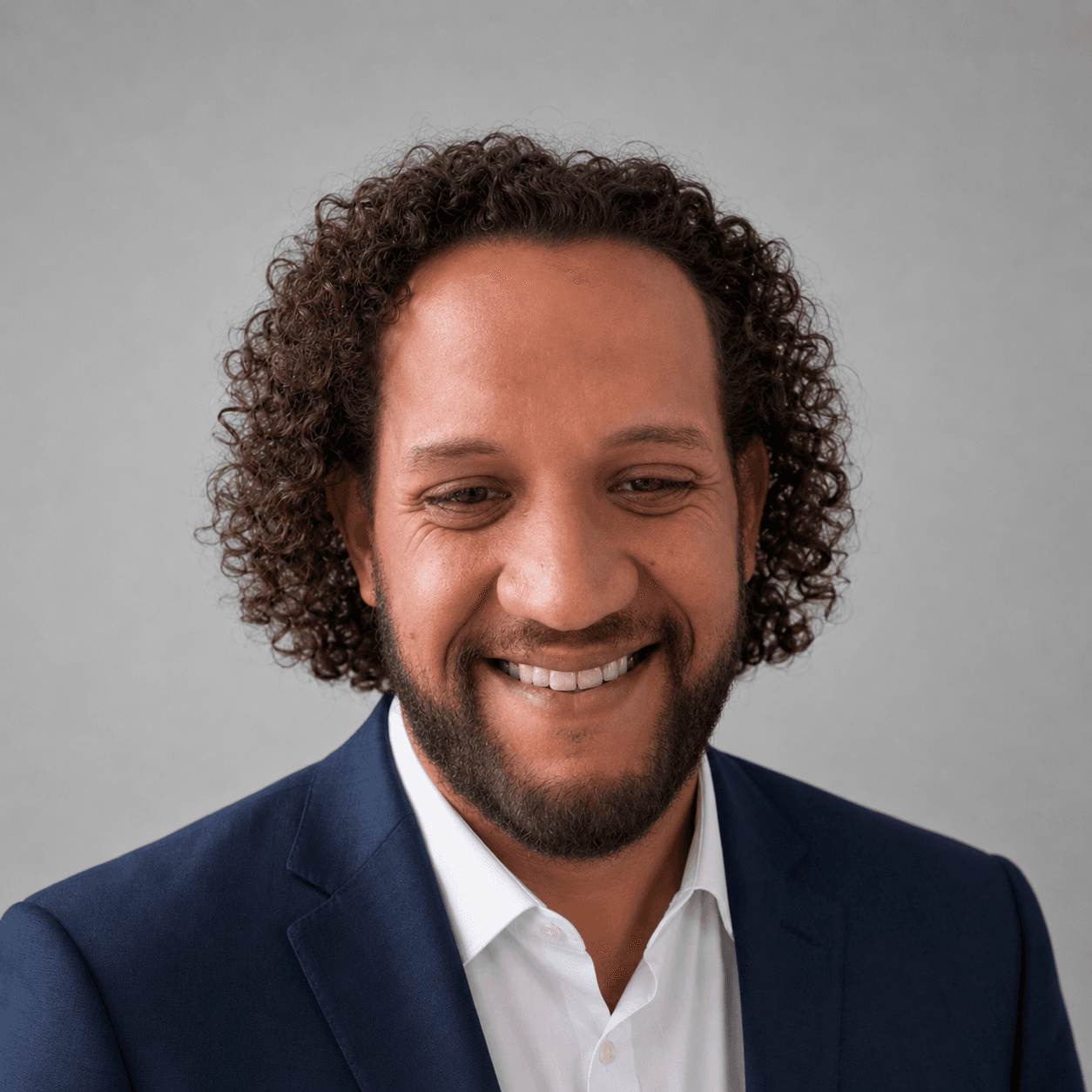
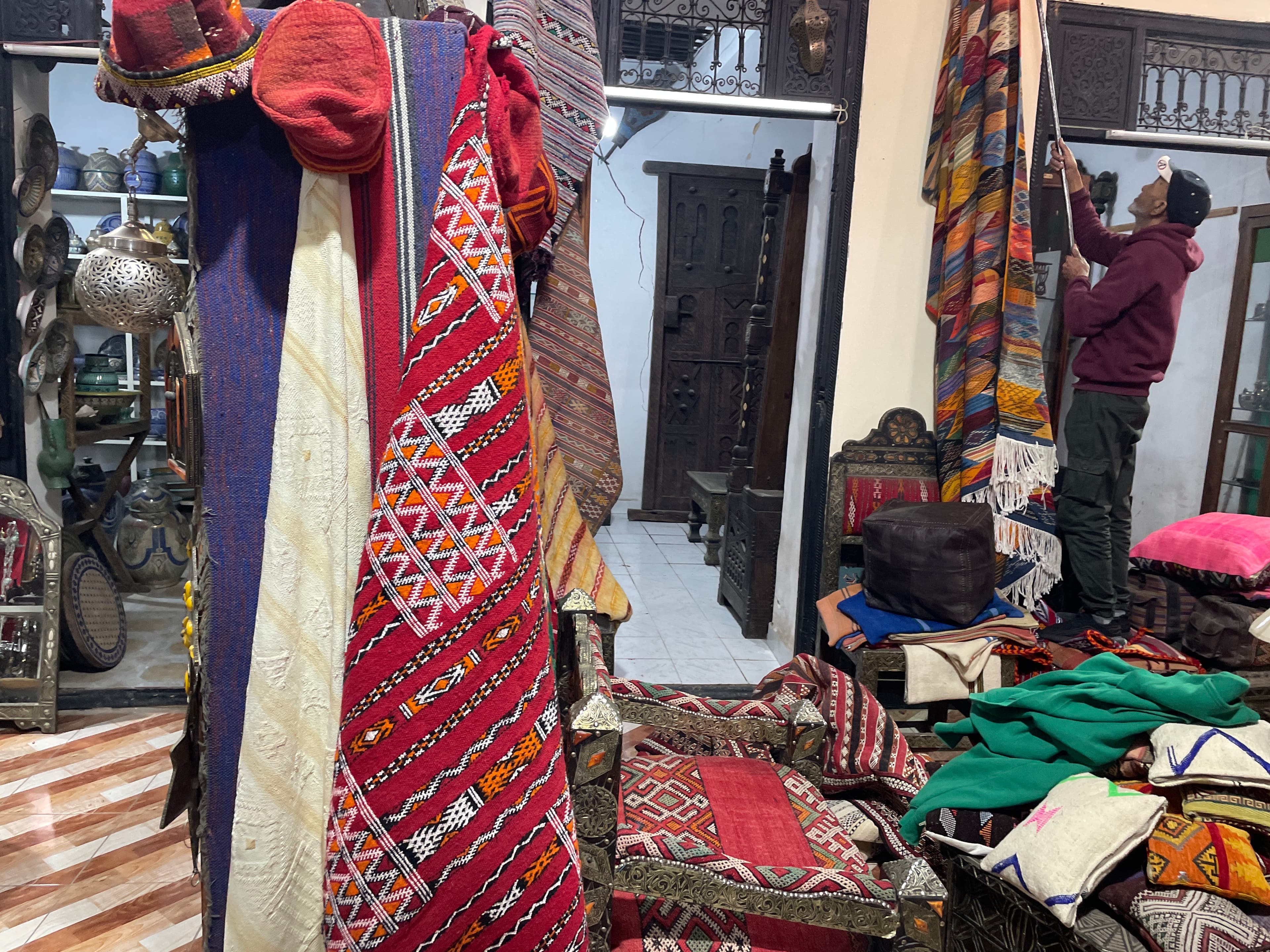
I grew up around one of those bazaars. My grandfather traded rugs in Marrakech long before I started sourcing them myself. The more I learned about the rugs around me, the more I understood that the journey between the loom and the bazaar was part of their story too.
And that journey helps explain something that is often misunderstood today: the people between the person who wove a rug and the person who eventually buys it aren't always an unnecessary "middleman."
Sometimes, they are the reason the rug could travel at all.
Why Moroccan rugs became tied to place
Historically, Moroccan weaving traditions developed locally.
There was no social media showing a weaver in one part of Morocco what somebody hundreds of kilometres away was making. Travel was harder. Materials depended heavily on what was available locally or accessible through existing trade routes. Most importantly, people made textiles according to the lives they actually lived.
Climate alone could make an enormous difference.
In colder mountain regions, substantial wool pile provided warmth. In other areas and for other purposes, lighter flatwoven textiles made more sense because they could be folded, moved and used in different ways.
This is why geography matters so much when learning about Moroccan rugs.
Take Beni Ourain.
Today, "Beni Ourain" is sometimes used almost as a design style for any cream rug with dark geometric lines. But a traditional Beni Ourain rug belongs to a specific northeastern Middle Atlas weaving region. Its deep wool pile, largely undyed ivory ground and dark geometric lines make sense when understood as part of a mountain textile tradition.
The same principle applies across Morocco.
Wool, climate, altitude, available dyes, trade routes, household needs and knowledge passed between generations all contributed to distinctive regional weaving traditions.
The names we use today aren't quite as simple as saying every rug was always neatly named after a region. Some of the categories used in the rug trade today were later formalised and reshaped, including during the French Protectorate.
But the underlying relationship between place and weaving is real.
And understanding that relationship becomes particularly important once the rug leaves the place where it was made.
Woven at home, around everyday life
Many rural Moroccan rugs were originally household objects before they were commercial products.
They covered floors. They provided warmth. Textiles could be used for sleeping, as blankets or covers, as dividers and for other practical purposes around the home.
Weaving happened within everyday life.
Families worked with wool and materials available to them locally, and knowledge of weaving passed through communities and generations. A rug could be worked on when daily life allowed rather than according to a commercial production schedule.
often, more than one person could work on the same textile.
And when you spend enough time examining handmade rugs, changes in the hand of the weaving can sometimes remain visible in the finished piece: one area may feel slightly tighter, another looser; the rhythm of the weaving can change as the rug progresses.
That irregularity isn't something I look at as a defect.
It's part of what tells you that you are looking at an object made by hand rather than something produced by a machine.
Some rugs remained in family homes for years before ever entering the market. Eventually a household might make or acquire a replacement, decide it no longer needed an older piece, or simply need the money more than the rug.
Many of the pieces we now describe as vintage or old village Moroccan rugs began their lives this way.
But there was an obvious problem.
The person who owned the rug wasn't necessarily in a position to leave their daily life, travel to Marrakech — or even to the next major town — and spend days trying to find someone to buy it.
Someone had to bring the market closer to them.
When a rug became part of an exchange
This is where the story becomes much more personal for me.
Growing up around my grandfather's bazaar, I learned that the people who brought rugs into the market weren't simply rug dealers who appeared one day carrying carpets.
There was an entire economy behind them.
Men and women travelled through their own villages and neighbouring villages looking for rugs, blankets and other household textiles that families were ready to part with. Sometimes they paid money. Other times, the exchange could involve things the household needed — food, clothing or other goods that were easier for the travelling buyer to obtain.
The rug was valuable, but so were the things arriving from outside the village.
What is important to understand is that the person selling the rug wasn't necessarily someone whose profession was "rug weaver."
She might have woven the rug, but her everyday work could be on a small farm, looking after animals, managing a household or doing many other things.
The person moving through the villages solved that problem.
A woman might spend several days going through her village and neighbouring communities and end up with three rugs. She could then take those pieces to a weekly market and try to sell them.
That person is what we might now call a middleman.
But when you look at what she was actually doing, that word suddenly feels very inadequate.
She wasn't simply standing between the maker and the buyer.
She was creating the connection between them.
From one weekly souk to another
This is one of the parts of the Moroccan rug trade that is easy to miss if you only encounter rugs once they reach Marrakech.
Morocco's weekly souks don't all happen on the same day.
That matters.
Imagine a woman has spent several days travelling through villages and has acquired three rugs.
There may be a market in one town on Monday. If she gets there in time, that's where the rugs might be offered.
But if she doesn't arrive until Tuesday and that souk is finished for the week, the rugs don't simply wait because their "correct region" has passed.
She can continue to another village or town where a market is happening that day.
If the rugs don't sell there, they can travel again.
Or she may decide there is a better chance of getting a better price by taking them all the way to a larger city such as Marrakech.
And this is how a rug from one region can end up being sold in another.
A rug woven around Taznakht, for example, doesn't have to be sold in Taznakht. A rug offered at a market in the Zemmour area doesn't necessarily come from Zemmour. And a rug that eventually arrives in Marrakech may already have travelled through several completely different places.
That leads to something I think every person buying a vintage Moroccan rug should understand:
Where a rug was bought is not necessarily where it was woven.
Taznakht itself is a good example. It is an important weaving and market centre within the southern Moroccan rug trade, but its market also brings together rugs from across the Atlas. Buying a rug in Taznakht does not, by itself, prove that it was woven there.
This is also why, when I source rugs for Loom & Hearth, I distinguish between what I actually know about a piece and what its construction, materials and visual characteristics suggest.
This movement from one place to another isn't a flaw in the rug's story.
It is the story.
The person in the middle wasn't always the problem
Today, there is a phrase you will see frequently when Moroccan rugs are sold internationally:
"We cut out the middleman." or "we give a high % to the weaver"
There can be real value in direct relationships with weavers. Contemporary cooperatives and businesses can create more transparent supply chains, commission work directly and provide regular income to the artisans they work with.
That's a good thing.
What I question is the idea that **direct automatically means ethical, while an intermediary automatically means exploitative.**
Because think about the woman travelling through those villages.
If people stop buying from her because she is considered an unnecessary middleman, what happens to the households she was buying from?
The person living in a remote village doesn't suddenly gain direct access to an international customer.
She may simply lose the person who used to come and buy from her.
That is the part of the conversation I think gets lost.
The weavers who have direct relationships with established international brands, retailers or organised cooperatives have something valuable: **access to a market.**
But they aren't necessarily representative of every woman weaving in rural Morocco.
The person farther away, without that connection, still needs a way for what she makes or owns to reach someone willing to buy it.
Traditionally, that connection was created by people travelling between villages, souks and cities.
They spent the time travelling. They carried the rugs. They carried the financial risk. They might buy three pieces without knowing when the next buyer would appear.
Yes, they made money when they sold them.
That was their work.
The question shouldn't simply be:
"Is there a middleman?"
It should be:
"What does each person in the chain actually contribute?"
What changed: now the materials travel towards the weaver
The system today is different.
Roads, phones, social media, tourism and international demand have changed what Moroccan weavers can see, what buyers can request and how quickly information travels.
And in some cases, the direction of the rug trade has almost reversed.
Historically, a family used the wool and materials available to them, made a textile according to their needs and local traditions, and then — if that rug eventually left the household — the finished object travelled outward until it found a market.
Today, the demands of the market can travel in the opposite direction.
A trader can arrive in a village already knowing what people are buying. They can bring wool and particular dye colours with them. They can ask for a particular size, palette or type of rug and leave the materials with the weaver.
Instead of buying whatever happens to be available after it has been made, they can commission what the market is asking for and return later to collect the finished pieces and pay for the work.
That's a profound change.
Before, the rug travelled from the household to find the market.
Now the market can travel back towards the loom.
That doesn't mean traditional weaving has disappeared.
Women still weave using knowledge and techniques passed through generations while producing something intended from the beginning for a customer they will probably never meet.
It also helps explain why regional labels have become more complicated today.
A weaver can now see what is being made somewhere else. A trader can request something influenced by a commercially successful style from another region. Materials themselves can travel much farther.
The geographical isolation that helped create such distinctive regional traditions is no longer the same.
Tradition isn't the absence of change.
Moroccan weaving has always responded to materials, trade, necessity and economic reality. The international market is simply another force shaping it.
Direct doesn't automatically mean more traditional
A newly commissioned rug and a vintage rug can therefore have fundamentally different journeys.
With contemporary production, it is entirely possible for a business or cooperative to know exactly who made a rug. The dimensions, colours and materials may be decided before weaving even begins.
With an old village rug, the story can be very different.
The woman who originally wove it may never have intended to sell it.
It may have spent decades in a family home.
Then it may have passed to a local buyer, through one or more souks, to another trader and eventually to a bazaar.
By the time I find it, the name of the original weaver may simply be impossible to recover.
That doesn't make the rug less meaningful.
And I don't believe the missing parts should be filled with a prettier story simply because it makes the rug easier to sell.
Every rug has passed through many hands
The easiest way for me to understand all of this is to think about the people who used to bring rugs to my family's bazaar.
The rugs they arrived with weren't all the same.
Some had been bought for money. Some had come through exchanges. Some were newer pieces. Others had already spent years being used inside people's homes before entering the market.
And the person who eventually carried them into Marrakech was only one part of a journey that had already started long before the rug reached our door.
Growing up around the bazaar made that chain feel completely normal to me.
Only later did I realise how differently the Moroccan rug trade can be presented outside Morocco — as if there should always be one straight line from a named weaver directly to the final customer.
For many old rugs, there simply isn't.
When I look at the rugs I source today, I still think about that chain.
By the time a rug reaches my hands, its journey may already have involved a family, a village buyer, a weekly souk, a regional trader and a bazaar.
I may know where it was bought.
I can examine its construction.
I may be able to identify the weaving tradition it most likely belongs to.
Sometimes I will have more precise provenance.
And sometimes I will not know the name of the woman who first sat at the loom decades ago.
I would rather tell you that honestly than invent the missing parts.
Because the people who carried these rugs from one place to another are not interruptions in the story of Moroccan weaving.
They are part of how that story travelled.